Socrates
c. 470-399 BC
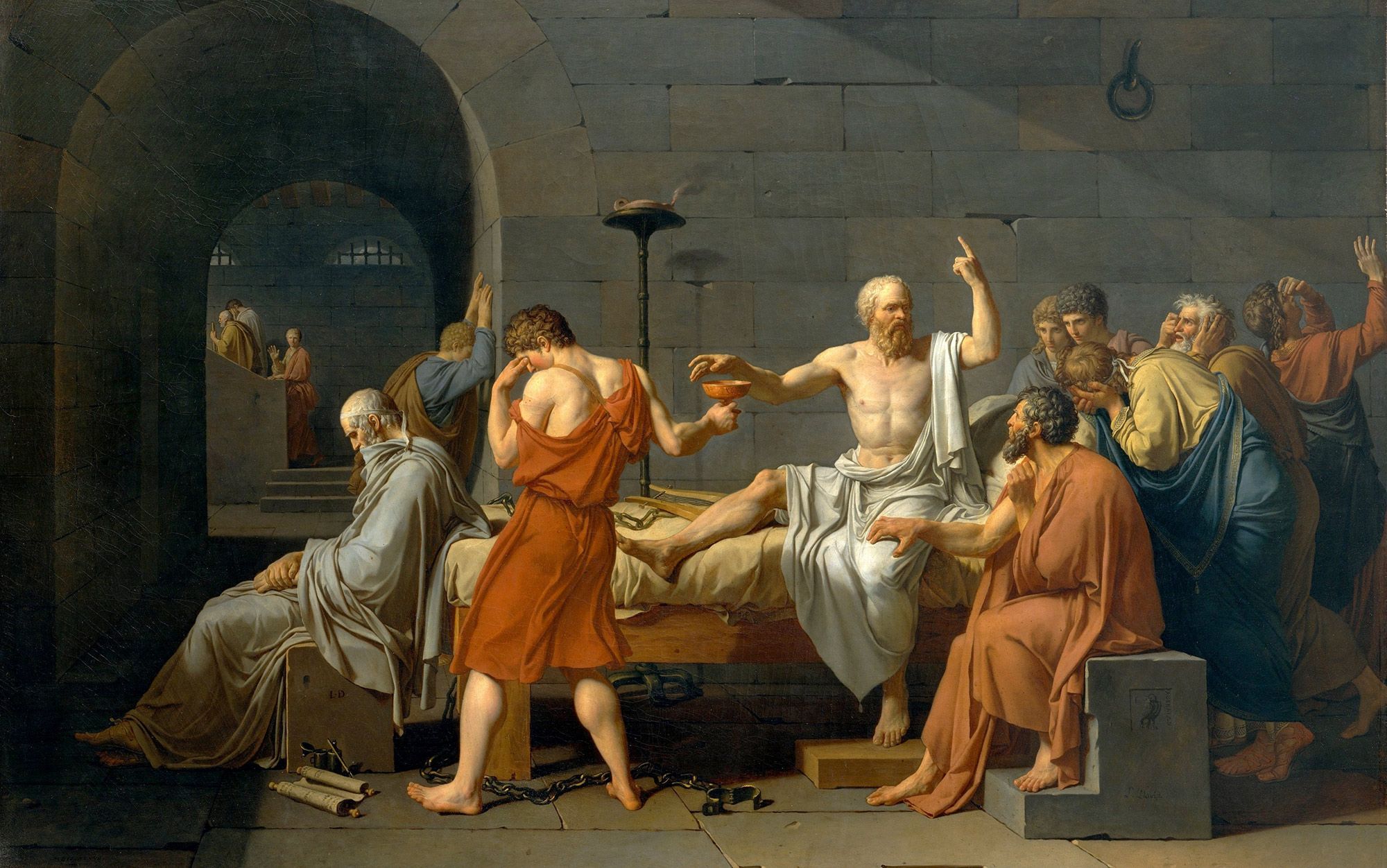
The unexamined life is not worth living.
In 399 BC Socrates, then about 70, was tried in Athens on a charge of impiety, for not acknowledging the city's gods and introducing new deities, and of corrupting the young. Meletus swore the formal accusation, with Anytus and Lycon as co- accusers. The jury was probably 501 men. Plato's remarks imply a guilty vote of roughly 280 to 221, and Plato says a switch of 30 votes would have acquitted him. Socrates then proposed a fine of 100 drachmas instead of the death penalty his accusers sought; a fine of 3,000 drachmas was later put forward, but the court voted for death by a larger majority than it had voted guilty. Friends urged him to escape. He refused, and drank the hemlock.
Athens never formally reversed the verdict. The case endured as the founding example of a state punishing a thinker for questioning it. In 2012 a mock retrial before ten international judges split five to five, and the judges who voted guilty said they would not have imposed death. The rehabilitation of Socrates has been carried out by readers, not courts.