Prohibition
1920-1933
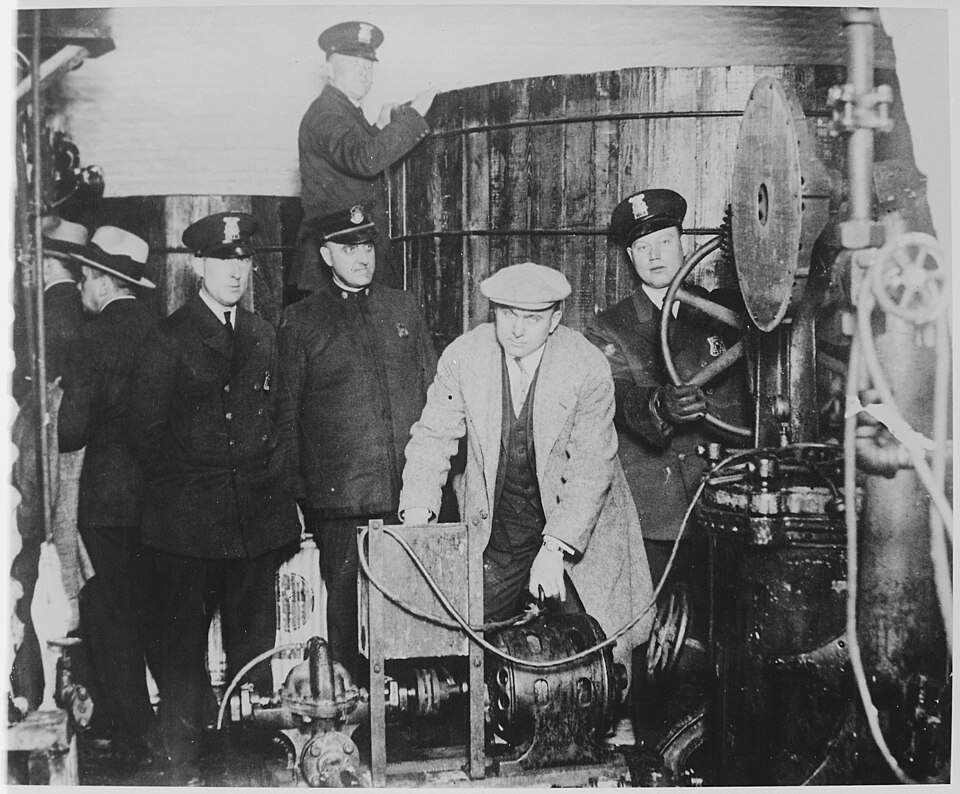
The eighteenth article of amendment to the Constitution of the United States is hereby repealed.
The Eighteenth Amendment, ratified on 16 January 1919, banned the manufacture, sale and transport of alcoholic drinks in the United States. Congress passed the Volstead Act, which defined and enforced the ban, on 28 October 1919, overriding President Wilson's veto, and Prohibition took effect on 17 January 1920. Federal law did not make drinking itself a crime, though some states banned possession. Overnight, brewers, distillers, bar owners and anyone who sold a drink became criminals. By 1925 New York City alone had an estimated 30,000 to 100,000 speakeasies. Federal authorities opened 7,291 Volstead Act cases in the first six months of 1920 and 29,114 in 1921. One study found that organized crime in Chicago tripled, though other scholars dispute how much crime really rose.
The Cullen-Harrison Act, signed on 22 March 1933, legalised beer and light wine. On 5 December 1933 the Twenty-first Amendment repealed the Eighteenth, the only time an amendment to the US Constitution has been repealed. Historians still disagree about the effects: cirrhosis deaths fell by nearly two thirds, but government- denatured industrial alcohol may have killed up to 10,000 people. A trade that had been a crime one year was a licensed business the next.