Alan Turing
1912-1954
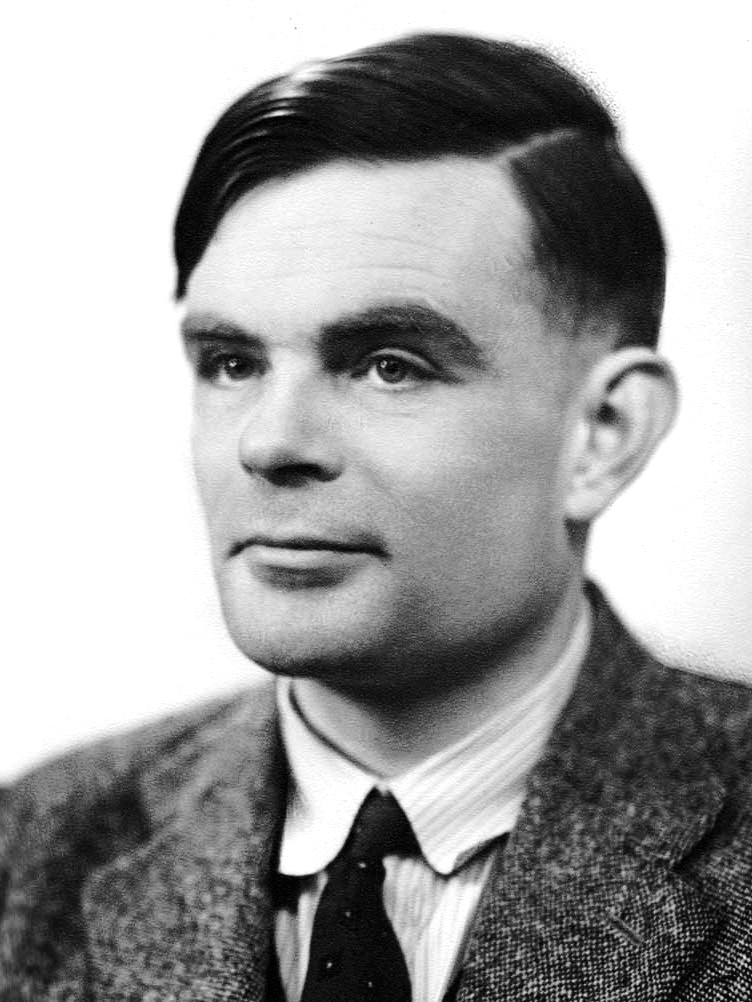
We can only see a short distance ahead, but we can see plenty there that needs to be done.
Alan Turing was the mathematician who helped break German ciphers in the Second World War and laid the foundations of computer science. In January 1952 he reported a burglary at his home in Wilmslow, and in the course of the police inquiry acknowledged a relationship with a man, Arnold Murray. Both were charged with gross indecency under a law dating from 1885. Turing pleaded guilty on 31 March 1952. Instead of prison he accepted twelve months of probation on condition that he undergo hormone treatment, injections of synthetic oestrogen, a treatment known as chemical castration. He lost his security clearance and his consultancy work for GCHQ. He died on 7 June 1954, aged 41, of cyanide poisoning. The inquest recorded suicide, although the evidence is also consistent with an accident.
The state came round slowly. In September 2009, after a public petition, Prime Minister Gordon Brown apologised for treatment he called appalling. On 24 December 2013 Queen Elizabeth II granted Turing a posthumous royal pardon, and the Justice Secretary, Chris Grayling, called the sentence "unjust and discriminatory". In 2017 a law informally named after him pardoned other men convicted under the same legislation, and in June 2021 his portrait appeared on the Bank of England 50 pound note.