Julian Assange
b. 1971
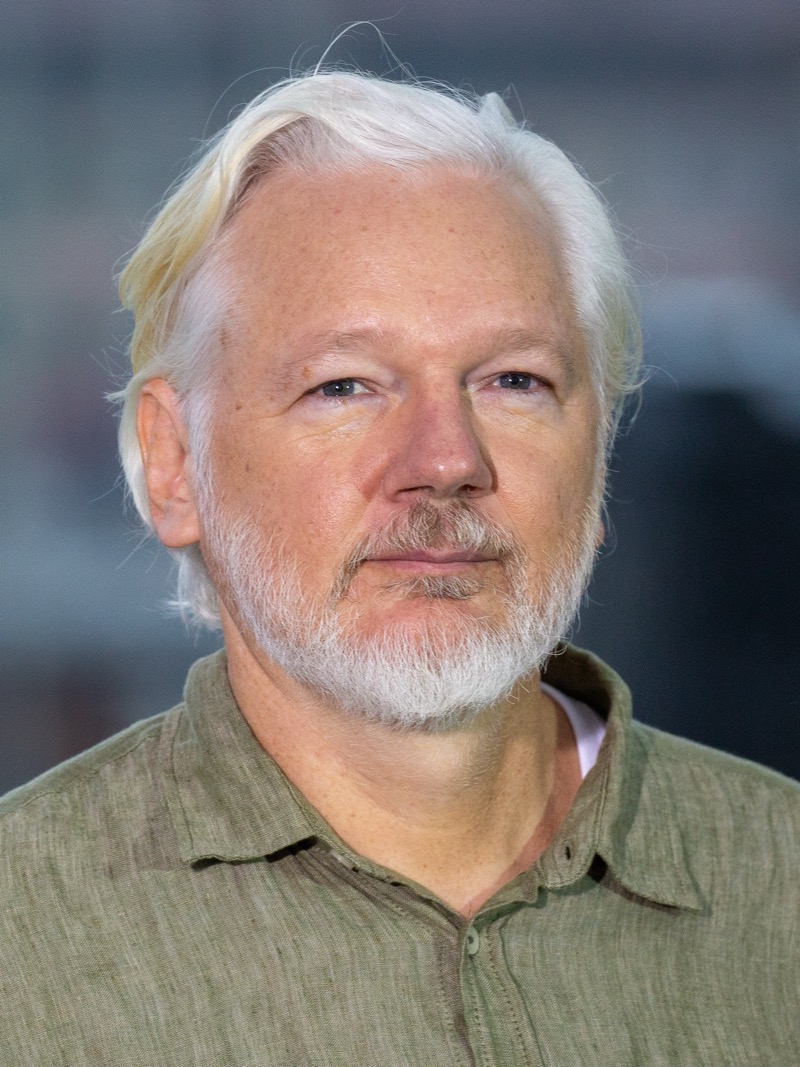
I eventually chose freedom over an unrealizable justice.
Julian Assange is the Australian founder of WikiLeaks, which in 2010 published a US military video of a 2007 helicopter attack in Baghdad, then hundreds of thousands of classified Afghan and Iraq war reports, and later a large cache of US diplomatic cables. Sweden sought to question him in 2010 over sexual assault allegations; that investigation was finally dropped in November 2019 on grounds of weak evidence. In 2012 he took refuge in Ecuador's London embassy, where he stayed until 11 April 2019, when he was arrested. He then spent five years in Belmarsh prison fighting extradition to the United States.
He never went to trial. In June 2024 he pleaded guilty in a US court on the island of Saipan to one count of conspiring to obtain and disclose national defense information, was sentenced to time already served, and flew home to Australia. In October 2024 he told the Council of Europe's Parliamentary Assembly that he had chosen freedom over an unrealizable justice.
The Charge
The US indictment unsealed in 2019 began with a conspiracy to commit computer intrusion, and was followed by further counts under the Espionage Act of 1917 for obtaining and publishing classified documents. Critics noted it had never before been used against a publisher. The plea of June 2024 replaced all of this with a single count.
The Case For
Press freedom groups argued that charging a publisher for publishing classified material threatens every journalist who does the same, and that he was punished for revealing, among other things, the 2007 helicopter attack. The Swedish case against him was dropped. A Council of Europe report concluded he was a political prisoner. Years of confinement in an embassy and then a high security prison were served without any trial or conviction.
The Case Against
The US government said he went beyond publishing: the computer intrusion charge alleged he agreed to help Chelsea Manning crack a password to access classified files. It also argued that publishing unredacted material put named sources at risk. He did breach his UK bail in 2012 by entering the embassy. In the end he pleaded guilty to a count under the Espionage Act.
Where Do You Stand?
He was held for years and in the end was neither tried nor cleared: he left court a convicted man with a sentence already served. Does a plea bargain under those conditions prove guilt, or only the cost of defending against a superpower? Is publishing secrets a crime when journalists do it too?
Where do you stand?