Emmeline Pankhurst and the Suffragettes
1858-1928
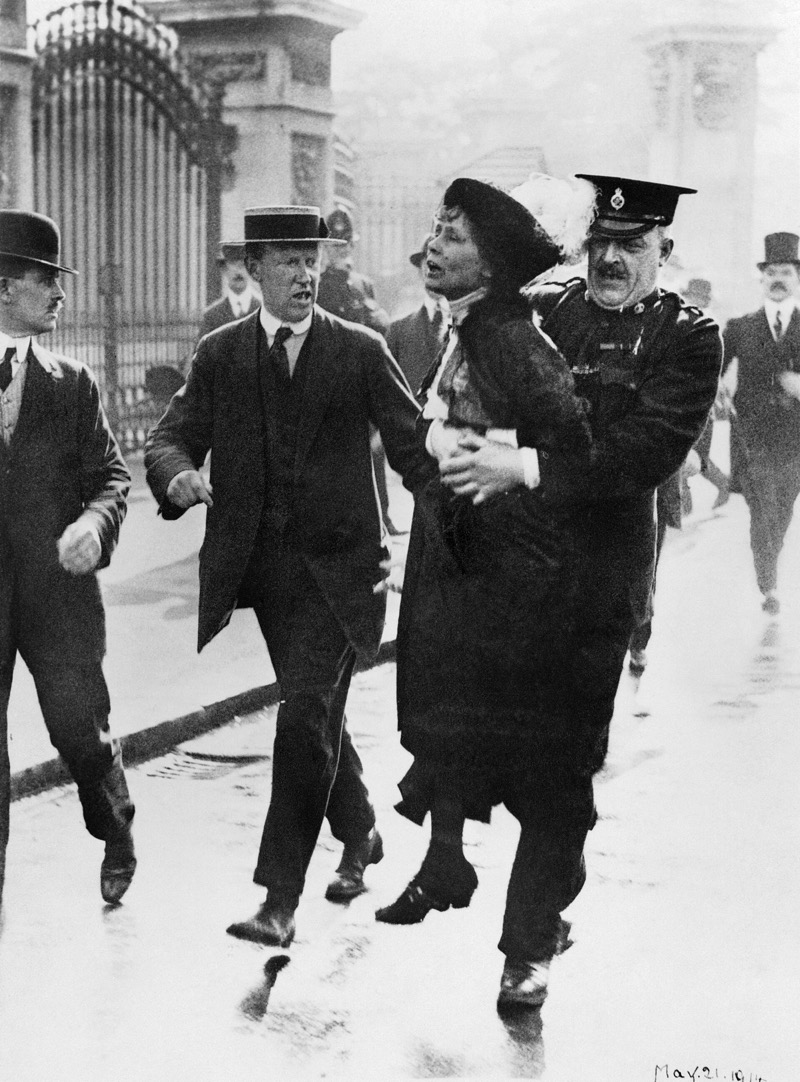
We are here not because we are law-breakers; we are here in our efforts to become law-makers.
Emmeline Pankhurst founded the Women's Social and Political Union, the Suffragettes, in Manchester on 10 October 1903. On 13 February 1908 she led a deputation to the House of Commons and was arrested for obstructing a policeman. The next day she was sentenced to six weeks in Holloway Prison and served all of it. She was arrested seven times before votes for women were won. In 1912 she and Emmeline Pethick-Lawrence were convicted at the Old Bailey of conspiracy to commit property damage after a window-smashing campaign, and she began hunger strikes in prison. In 1913 the government passed the Prisoners (Temporary Discharge for Ill Health) Act, known as the Cat and Mouse Act, which released weakened hunger strikers and re-arrested them once they had recovered.
She died on 14 June 1928. The Representation of the People Act 1918 had given the vote to women over 30, with restrictions, and on 2 July 1928, weeks after her death, women over 21 won it on equal terms with men. On 6 March 1930 a statue of her was unveiled in Victoria Tower Gardens, beside the Houses of Parliament, with Prime Minister Stanley Baldwin presenting it. The Cat and Mouse Act was repealed for England and Wales in 1952.