George Washington
1732-1799
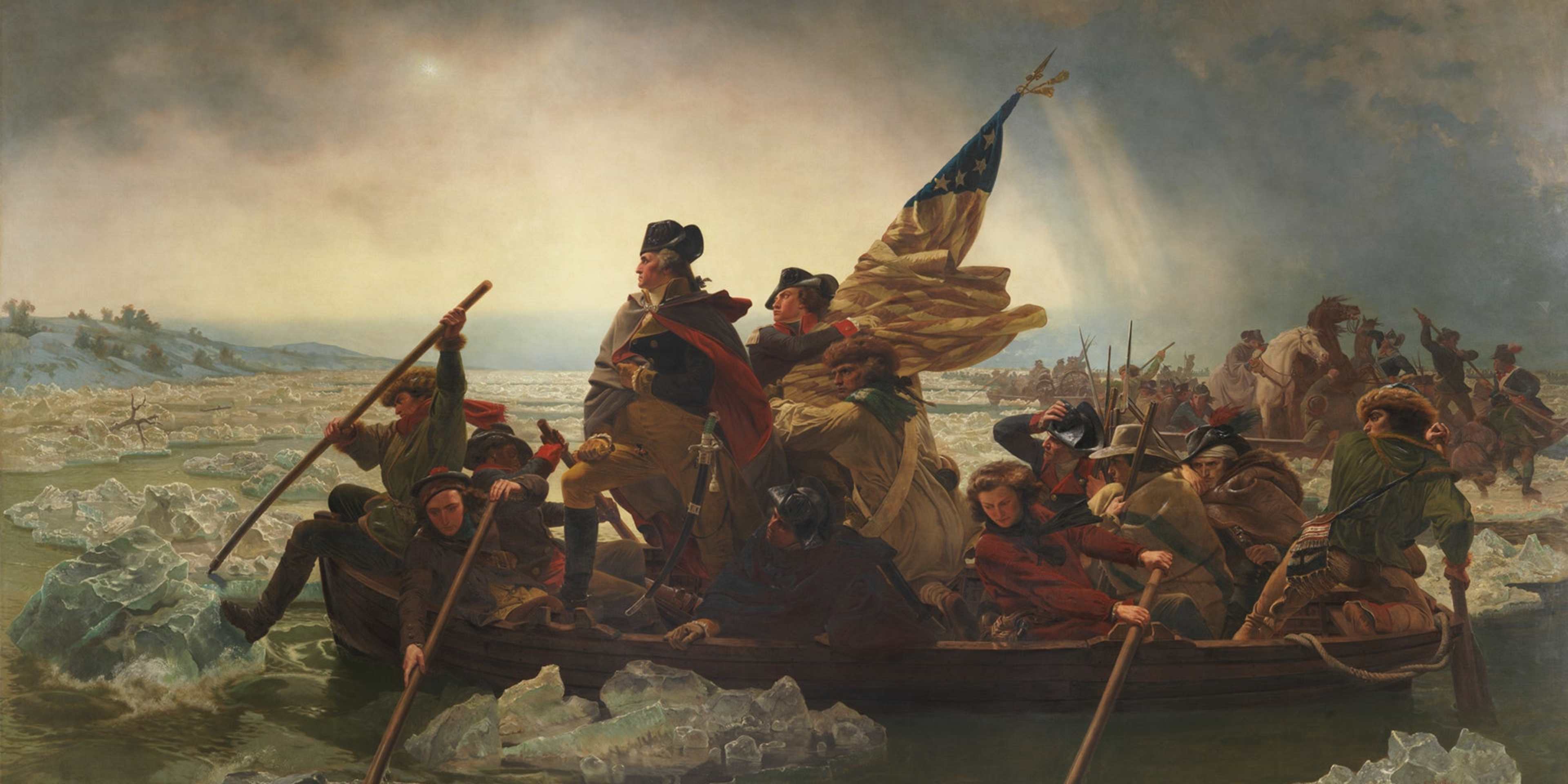
I hold the maxim no less applicable to public than to private affairs, that honesty is always the best policy.
To the British Crown, George Washington was a rebel in arms. On 23 August 1775 King George III issued a Proclamation of Rebellion declaring the colonists traitors, and Washington commanded the army that was fighting the King's troops. In 1776 General Howe sent a letter addressed to "George Washington, Esq.", pointedly refusing him his military rank, and Washington refused to receive it. He was never tried. The charge exists only as the status the Crown would have applied had it won: HistoryNet notes that he would have been guilty of an extensive act of treason, and likely hanged.
Britain lost. The Treaty of Paris, signed on 3 September 1783, recognised American independence, and Washington went on to be the first President. He was awarded the Congressional Gold Medal, was named General of the Armies posthumously, is known as the Father of His Country, and gave his name to the national capital and a state. A traitor's crime became a founding father's credential.