Harriet Tubman
c. 1822-1913
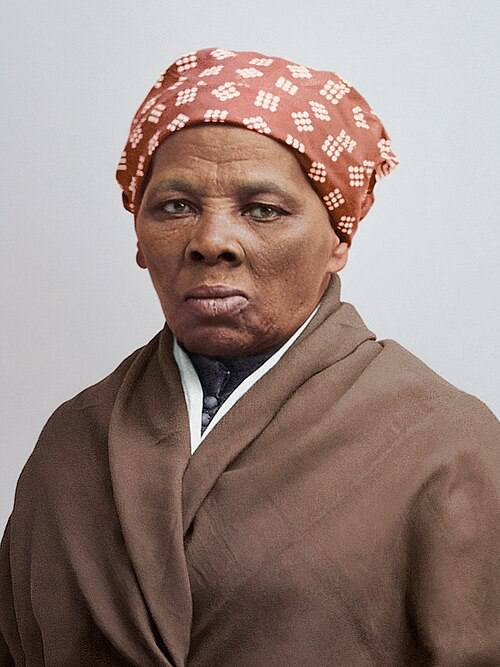
Death or Liberty, one or tother I mean to have.
Harriet Tubman escaped from slavery in Maryland in 1849 and returned over the next decade to bring others north. She made about 13 rescue trips between 1851 and 1862, freeing roughly 70 people and giving directions to 50 or 60 more. The Fugitive Slave Act of 1850 required officials to help capture escaped slaves even in free states and imposed heavy penalties on anyone who helped them. Tubman herself was a fugitive, and the law threatened anyone who helped people like her. The famous 40,000 dollar bounty is not credible: it comes from an abolitionist's claim in 1867 and no documentation supports it. The only documented reward notices are for her brothers. She said she never lost a passenger.
In the Civil War she worked for the Union as a nurse, then as an armed scout and spy, and helped guide the 1863 Combahee Ferry raid that freed more than 700 enslaved people. She is widely credited as the first woman to lead an armed US military operation, and she received little pay. She died of pneumonia on 10 March 1913 in Auburn, New York. The country that had made her escape a crime has since put her on postage stamps in 1978 and 1995, named a national historical park in Auburn and a national monument and park in Maryland after her, issued three commemorative coins in 2024, and commissioned her a posthumous brigadier general in the Maryland Army National Guard on 11 November 2024.