Sacco and Vanzetti
Sacco 1891-1927, Vanzetti 1888-1927
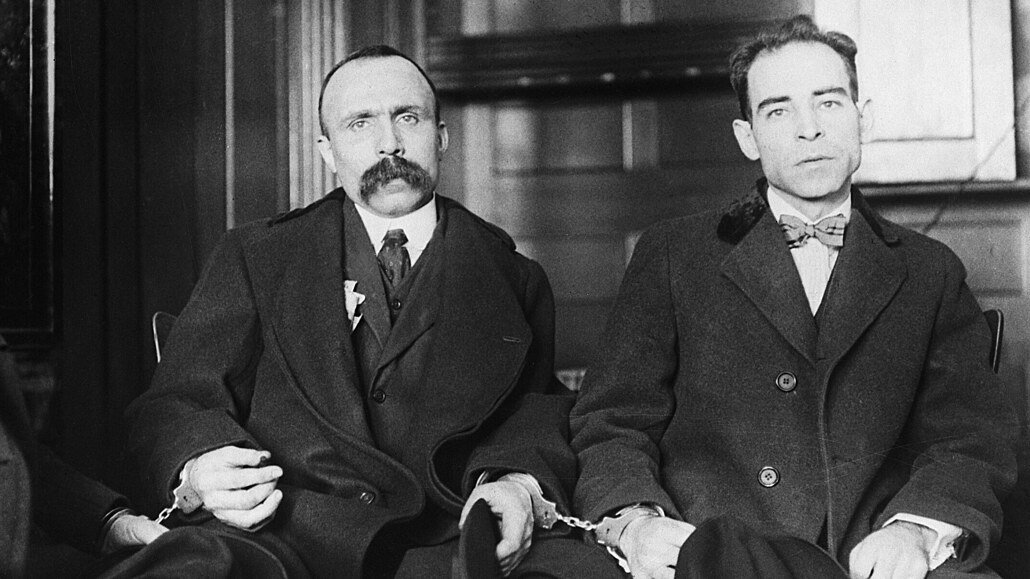
I am innocent of all crime, not only of this one, but all.
Nicola Sacco and Bartolomeo Vanzetti were Italian immigrants and anarchists. On 15 April 1920 a paymaster and a guard were shot dead during an armed robbery of a shoe factory in Braintree, Massachusetts. The two men were arrested in early May 1920, and Vanzetti had already been convicted separately that year of an earlier attempted robbery. On 14 July 1921 a jury in Dedham found both guilty of first degree murder, and the judge sentenced them to death.
Appeals failed over six years, in spite of a confession in November 1925 by another prisoner, Celestino Medeiros, who said the two men had no part in the crime. They were executed on the night of 22 and 23 August 1927. Exactly fifty years later, on 23 August 1977, Massachusetts Governor Michael Dukakis proclaimed that they had been unfairly tried and convicted, and that any disgrace should be forever removed from their names. He did not pardon them.
The Charge
Both were charged on 5 May 1920 and tried for first degree murder in the Braintree robbery. The prosecution said a bullet from the guard's body matched Sacco's revolver and that witnesses placed the two men at the scene.
The Case For
The defense produced sixteen witnesses who said they bought eels from Vanzetti in Plymouth around the time of the robbery. Defense experts disputed the ballistics, and one prosecution officer later said he could not positively identify Sacco's gun. A historian, David Kaiser, has argued that the key bullet and casing were substituted. Medeiros confessed and the defense pointed to a local gang, yet the court refused a new trial. The 1977 proclamation by Governor Dukakis said the trial had been unfair.
The Case Against
Prosecution experts matched the fatal bullet to Sacco's pistol, and a 1927 comparison supported them, though later critics question the chain of custody. The verdict was upheld on appeal and by a special advisory committee in 1927. Prosecutors argued that false statements the men made to police at their arrest showed consciousness of guilt, while the defense said they came from fear of being deported as radicals. The Dukakis proclamation spoke of an unfair trial, not of innocence, and there was no pardon.
Where Do You Stand?
Can a trial be unfair and the verdict still be correct? A governor removed the disgrace without declaring them innocent. Is that justice, or a way of avoiding the question? And how much did being foreign anarchists in 1920 decide the outcome?
Where do you stand?